
Introduction
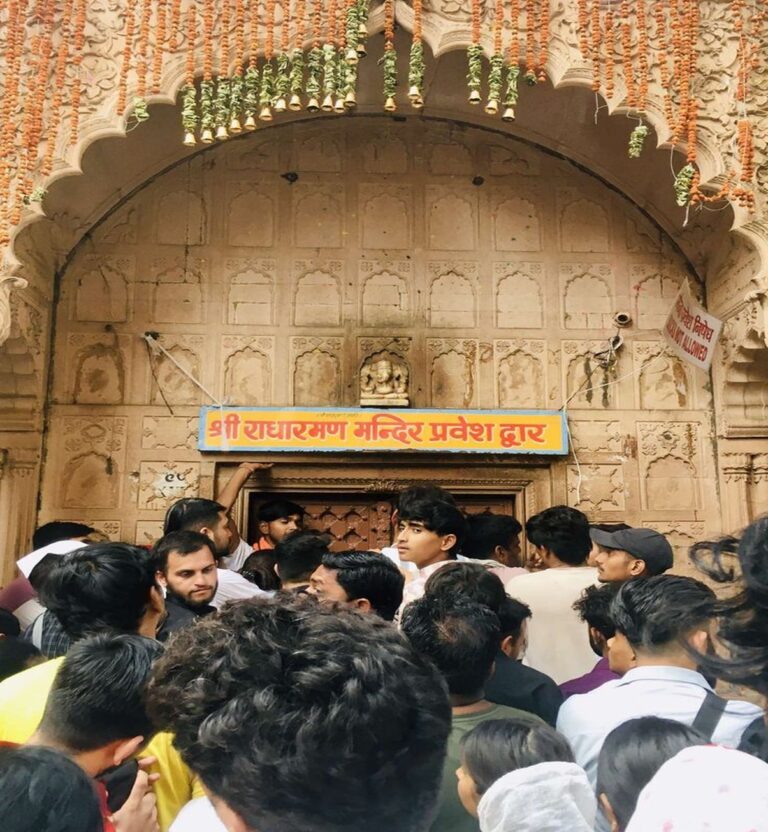
Shri Banke Bihari Temple is one of the most revered and visited temples dedicated to Lord Krishna in India. Located in the sacred town of Vrindavan in Uttar Pradesh, this temple attracts millions of devotees every year who come to seek the blessings of Lord Banke Bihari, a divine form of Shri Krishna. The temple is known for its unique traditions, spiritual atmosphere, and the mesmerizing idol of Lord Krishna that fills devotees with devotion and joy.
Vrindavan itself is considered the land of Lord Krishna’s childhood pastimes, making Banke Bihari Temple one of the most important pilgrimage destinations for Vaishnav devotees across the world. Whether you are a devotee, a spiritual seeker, or a traveler exploring India’s sacred heritage, a visit to Banke Bihari Temple is a truly unforgettable experience.
History of Shri Banke Bihari Temple
The history of Shri Banke Bihari Temple is deeply connected with the great saint and musician Swami Haridas, who was a devoted follower of Lord Krishna. Swami Haridas lived in Nidhivan, Vrindavan, where he spent his life immersed in devotion and spiritual practices.
According to tradition, Swami Haridas’s sincere prayers and devotion pleased Radha and Krishna, who appeared before him in their divine form. Unable to bear separation from their devotees, the divine couple merged into a single beautiful idol known as Banke Bihari Ji. The sacred idol was later installed in the temple where devotees continue to worship it today.
The term “Banke Bihari” has a special meaning:
- Banke means “bent in three places.”
- Bihari means “the supreme enjoyer.”
The idol depicts Lord Krishna standing in the famous Tribhanga posture, enchanting devotees with his divine beauty.
.
Spiritual Significance of Banke Bihari
Temple
Banke Bihari Temple is considered one of the holiest temples in the Braj region. Devotees believe that Lord Krishna personally resides here and blesses all those who visit with pure devotion.
One of the most unique aspects of this temple is that the deity is worshipped not as a distant God but as a beloved child and friend. The atmosphere inside the temple is filled with devotional songs, chants, and an overwhelming sense of divine love.
The temple becomes especially vibrant during major festivals such as:
- Janmashtami
- Radhashtami
- Holi
- Jhulan Yatra
- Sharad Purnima
- Kartik Month Celebrations
During these occasions, thousands of devotees gather to witness the special decorations and celebrations of Banke Bihari Ji.
Unique Darshan Tradition
Unlike most temples where devotees continuously view the deity, Shri Banke Bihari Temple follows a distinctive darshan tradition.
The curtain in front of the deity opens and closes repeatedly at short intervals. This practice is based on the belief that the divine charm of Banke Bihari Ji is so powerful that devotees may become completely absorbed in his beauty and lose awareness of their surroundings. Therefore, the curtain is periodically drawn to regulate the darshan experience.
This unique tradition makes the darshan at Banke Bihari Temple unlike any other temple in India.
Shri Banke Bihari Temple Darshan Timings
The temple timings vary according to the summer and winter seasons.
Summer Timings
Morning Darshan
- 7:45 AM – 12:00 Noon
Evening Darshan
- 5:30 PM – 9:30 PM
Shringar Aarti
- Around 7:55 AM to 8:00 AM
Rajbhog
- 11:00 AM – 11:30 AM
Temple Closing
- 12:00 PM and 9:30 PM respectively.
Winter Timings
Morning Darshan
- 8:45 AM – 1:00 PM
Evening Darshan
- 4:30 PM – 8:30 PM
Shringar Aarti
- Around 9:00 AM
Rajbhog Aarti
- Around 1:00 PM
Temple Closing
- 1:00 PM and 8:30 PM respectively.
Important Note: Timings may change during festivals and special occasions. Visitors should verify the latest schedule before planning their trip.
Best Time to Visit Banke Bihari Temple
The temple remains open throughout the year, but the most pleasant months to visit are:
- October to March
- February and March during Holi celebrations
- August and September during Janmashtami
Winter months offer comfortable weather and a peaceful pilgrimage experience.
For those wishing to avoid crowds, weekdays and early morning darshan hours are generally recommended. Major festivals often witness extremely large gatherings of devotees.